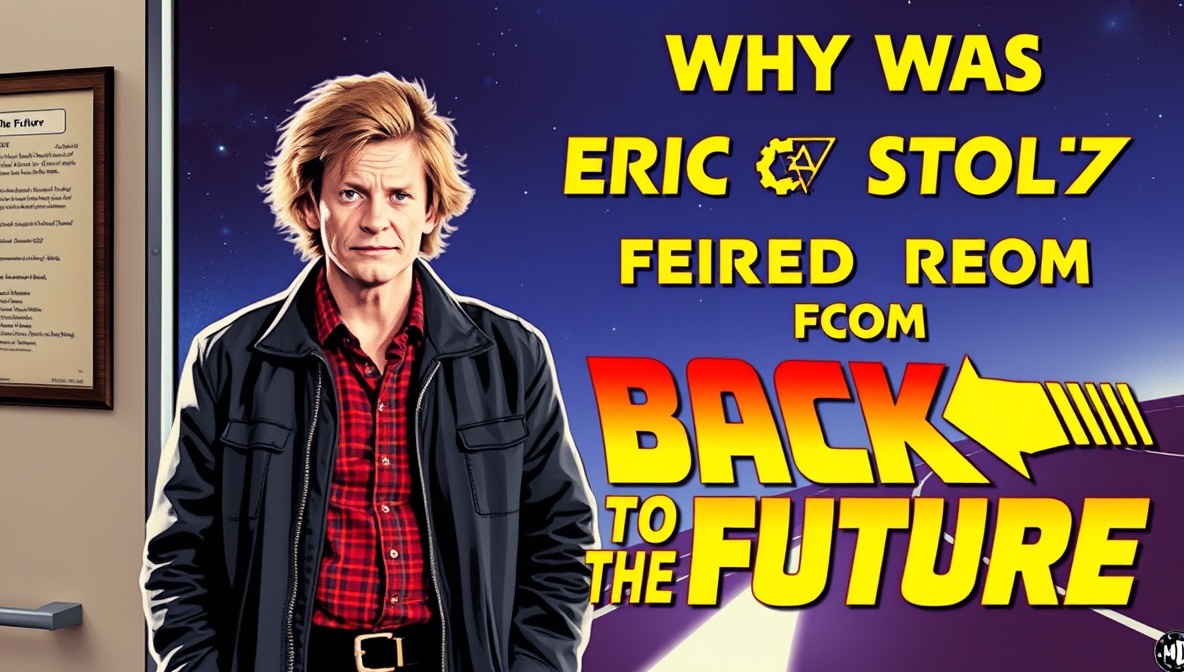
It’s genuinely hard to imagine Back to the Future without Michael J. Fox skateboarding through 1955 or shredding “Johnny B. Goode” at the Enchantment Under the Sea dance. Yet for the first six weeks of filming, an entirely different actor held that role. Understanding why was Eric Stoltz fired from Back to the Future requires stepping back into one of Hollywood’s most consequential mid-production casting changes, a decision that reshaped not just one film but an entire trilogy.
The Basic Timeline
Before diving into the specific reasons behind the decision, it helps to understand the actual sequence of events. Eric Stoltz was originally cast as Marty McFly and had been filming continuously for roughly four to six weeks before he was let go. On January 10, 1985, the production made it official, recasting the lead role with Michael J. Fox, who was simultaneously working full-time on the sitcom Family Ties.
Understanding why was Eric Stoltz fired from Back to the Future starts with recognizing just how far along filming already was when the change happened. This wasn’t a pre-production casting reversal caught early — Stoltz had already shot a substantial number of scenes, including Marty’s arrival in 1955, the DeLorean breaking down, and his eventual return to 1985, making the decision to replace him a genuinely costly and disruptive one for the production.
The Core Reason: A Mismatch in Tone
At the heart of every account explaining why was Eric Stoltz fired from Back to the Future sits a consistent explanation: his interpretation of Marty simply didn’t match the light, comedic tone director Robert Zemeckis and co-writer Bob Gale were building the film around. Stoltz approached the role using a more intense, method-acting style, reportedly staying in character even when cameras weren’t rolling and asking crew members to address him as “Marty” between takes.
- Stoltz’s performance leaned toward dramatic intensity rather than comedic lightness
- Bob Gale later explained that the character wasn’t delivering the humor the script called for
- The overall tone Stoltz brought to scenes felt mismatched with the film’s otherwise playful, adventure-comedy sensibility
- This tonal disconnect became increasingly apparent to Zemeckis and the crew as filming progressed
This tonal mismatch is consistently cited as the central answer to why was Eic Stoltz fired from Back to the Future, rather than any single dramatic incident or public controversy. It was, by most accounts, a slow-building recognition that the performance simply wasn’t serving the film the way the filmmakers had envisioned. why are people worried about the future of social security?
Stoltz’s Darker Interpretation of the Story
A specific detail that comes up repeatedly involves how Stoltz personally interpreted the film’s underlying story. According to interviews with the creative team, Stoltz reportedly viewed the ending, where Marty returns to a changed 1985, as something closer to a tragedy, since Marty essentially becomes an outsider within his own transformed family and life circumstances.
- Stoltz’s reading treated Marty’s displacement in the altered timeline as genuinely unsettling rather than triumphant
- This darker interpretation shaped how he played scenes throughout the film, not just the ending specifically
- Zemeckis and Gale had envisioned the story’s resolution as a feel-good, upward transformation for Marty’s family
- This fundamental difference in how the story’s emotional core should feel contributed meaningfully to why was Eric Stoltz fired from Back to the Future
This interpretive gap illustrates that the issue wasn’t simply about acting technique in isolation — it reflected a deeper disagreement about what kind of story Back to the Future was actually supposed to be telling.
Steven Spielberg’s Role in the Decision
As executive producer on the film, Steven Spielberg played a notably direct role in the decision that ultimately explains why was Erc Stoltz fired from Back to the Future. According to accounts of the production, tension building on set due to Stoltz’s method-acting approach led Spielberg to warn Zemeckis that a recast might be necessary to avoid jeopardizing the entire production.
- Spielberg’s concern centered on how the on-set tension might affect the broader production timeline and budget
- His involvement added significant weight to a decision Zemeckis was reportedly already wrestling with independently
- This level of executive-producer intervention underscores how seriously the production treated the mismatch
- The involvement of a figure as prominent as Spielberg reflects just how high-stakes this mid-production decision genuinely was
Spielberg’s direct involvement is a meaningful part of the full picture behind why was Eric Stoltz fired from Back to the Future, since it shows the decision wasn’t made lightly or in isolation by Zemeckis alone.
How Michael J. Fox Entered the Picture
Understanding the full context behind why was Eric Stoltz fired from Back to the Future also requires understanding how unusual Fox’s casting circumstances were. Fox had actually been Zemeckis and Gale’s original preference for the role, but scheduling conflicts with Family Ties initially made him unavailable, leading to Stoltz’s casting in the first place.
- Fox agreed to take over the role without having read the full script beforehand
- He juggled filming Back to the Future during the day and Family Ties in the evenings for a significant stretch of production
- Production had to continue filming certain scenes with Stoltz for a short period even after the decision was finalized, while logistics around Fox’s schedule were worked out
- This overlapping schedule reflects just how tight and demanding the transition period actually was for everyone involved
This scheduling complexity adds important context to why was Erc Stoltz fired from Back to the Future, since it shows the decision wasn’t simply about finding any replacement — it was specifically about securing an actor the filmmakers had wanted from the very beginning.
Zemeckis’s Own Account of the Decision
Robert Zemeckis has spoken candidly in interviews about how difficult this decision was for him personally, and his reflections add genuine emotional weight to understanding why was Eric Stoltz fired from Back to the Future. He has described the meeting where he broke the news to Stoltz as one of the hardest experiences of his entire career.
- Zemeckis has taken personal responsibility for what he described as a casting misjudgment rather than blaming Stoltz’s ability as an actor
- He specifically praised Stoltz’s talent while acknowledging the role simply wasn’t right for him
- Zemeckis described the experience as genuinely painful for everyone involved, not just a straightforward business decision
- His reflections emphasize a broader lesson about the importance of getting a role’s casting right from the very beginning
This candid reflection from Zemeckis himself provides some of the most direct, firsthand insight available into why was Erc Stoltz fired from Back to the Future, showing a level of genuine regret alongside the conviction that the change was ultimately necessary.
The Ripple Effect: Other Cast Changes
One of the more surprising details connected to this story involves a secondary casting change that followed directly from Stoltz’s departure. Melora Hardin, who had already filmed several scenes as Marty’s girlfriend Jennifer Parker, was also recast after Fox took over the lead role.
| Original Casting | Replacement | Reason |
|---|---|---|
| Eric Stoltz as Marty McFly | Michael J. Fox | Tonal mismatch, method acting approach |
| Melora Hardin as Jennifer Parker | Claudia Wells | Height difference relative to the shorter Fox |
This secondary recasting illustrates how far-reaching the consequences were once the decision behind why was Eric Stoltz fired from Back to the Future was finalized — the change didn’t just affect one role, it created a domino effect touching other cast members whose performances no longer fit the newly reconfigured production.
What the Film Might Have Looked Like With Stoltz
Given how much footage Stoltz had already shot, it’s worth considering how the finished film, and potentially its sequels, might have differed had he remained in the role. Several entertainment outlets have speculated on this based on Stoltz’s documented interpretation of the character.
- Scenes involving tension between Biff and Marty’s mother would likely have carried a heavier, more overtly dark tone
- The lighthearted energy that defines much of the trilogy’s humor may have been considerably muted throughout
- Later sequel moments, like the robbery in Back to the Future II, might have played with more genuine weight rather than as playful hijinks
- Doc’s death in Back to the Future III might have registered as a more devastating, less quickly resolved plot point
This speculation helps illustrate just how consequential the decision behind why was Eric Stoltz fired from Back to the Future actually was, extending its impact well beyond the first film into the tone and feel of the entire trilogy that followed.
Was It Really Stoltz’s “Fault”?
It’s worth addressing a nuance that comes up in more thoughtful retrospectives on this story: framing the situation purely as Stoltz being “fired” for poor performance somewhat oversimplifies what actually happened. Some retrospective accounts push back on this framing, suggesting the deeper issue was a fundamental miscasting from the start, rather than any failure on Stoltz’s part as a performer.
- Zemeckis himself has explicitly described the situation as his own miscasting decision, not a shortcoming in Stoltz’s acting talent
- Stoltz was performing the role as he genuinely interpreted it, based on a reasonable reading of the script’s underlying themes
- The mismatch reflected a difference in creative vision rather than a lack of effort or skill
- This more nuanced framing doesn’t change the outcome, but it does affect how fairly the situation is often remembered
Considering this nuance rounds out a more complete, fair answer to why was Eric Stoltz fired from Back to the Future, recognizing that the story is less about an actor failing and more about a fundamental mismatch between performer and role that became apparent only once filming was already well underway.
Why This Story Remains So Widely Discussed
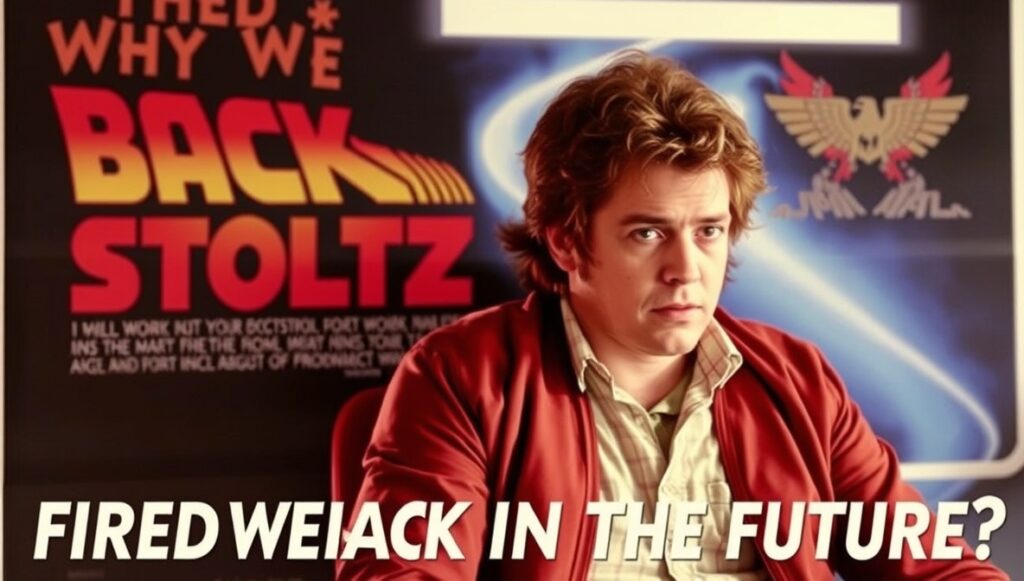
Decades later, this remains one of the most frequently revisited pieces of Back to the Future trivia, and it’s worth understanding why the story has such lasting appeal among film fans.
- The scale of the change (a lead actor replaced six weeks into filming) is genuinely rare in major studio productions
- The eventual success of the finished film makes the “what if” question especially compelling to fans
- Zemeckis and Gale’s willingness to discuss the decision candidly in interviews has kept the story circulating
- The additional ripple effect on Melora Hardin’s casting adds an extra layer of intrigue beyond the central Stoltz story alone
This enduring fascination is exactly why why was Eric Stoltz fired from Back to the Future remains such a frequently searched and discussed piece of film history, even forty years after the film’s original release.
Final Thoughts
The honest, complete answer to why was Eric Stoltz fired from Back to the Future comes down to a fundamental mismatch between the actor’s intense, method-driven interpretation of Marty McFly and the light, comedic tone Zemeckis and Bob Gale envisioned for the film. Steven Spielberg’s direct involvement, Zemeckis’s own candid regret about the decision, and the surprising ripple effect on Melora Hardin’s casting all add depth to a story that’s ultimately about a genuine, if painful, creative correction rather than any single dramatic failure. The result, of course, became one of the most beloved films of its era, though the road to Michael J. Fox’s iconic performance was considerably more complicated than most casual fans realize.
Frequently Asked Questions
How much of Back to the Future had Eric Stoltz already filmed before being replaced?
Stoltz had been filming continuously for roughly four to six weeks, completing a substantial number of scenes, including Marty’s arrival in 1955 and the DeLorean breakdown sequence, before the production decided to recast the role.
Was Michael J. Fox always the filmmakers’ first choice for Marty McFly?
Yes. Zemeckis and Gale reportedly wanted Fox from the beginning, but scheduling conflicts with his sitcom Family Ties initially made him unavailable, leading to Stoltz’s original casting.
Did Steven Spielberg play a direct role in the decision to fire Eric Stoltz?
Yes. As executive producer, Spielberg reportedly expressed concern about on-set tension and encouraged Zemeckis to consider recasting the role to avoid jeopardizing the production.
Did anyone else get recast after Eric Stoltz was let go?
Yes. Melora Hardin, who had already filmed scenes as Jennifer Parker, was replaced by Claudia Wells due to a height difference relative to the shorter Michael J. Fox.
Has Robert Zemeckis ever expressed regret about firing Eric Stoltz?
Yes. Zemeckis has described the experience as one of the hardest of his career, taking personal responsibility for what he called a casting misjudgment rather than blaming Stoltz’s talent as an actor.